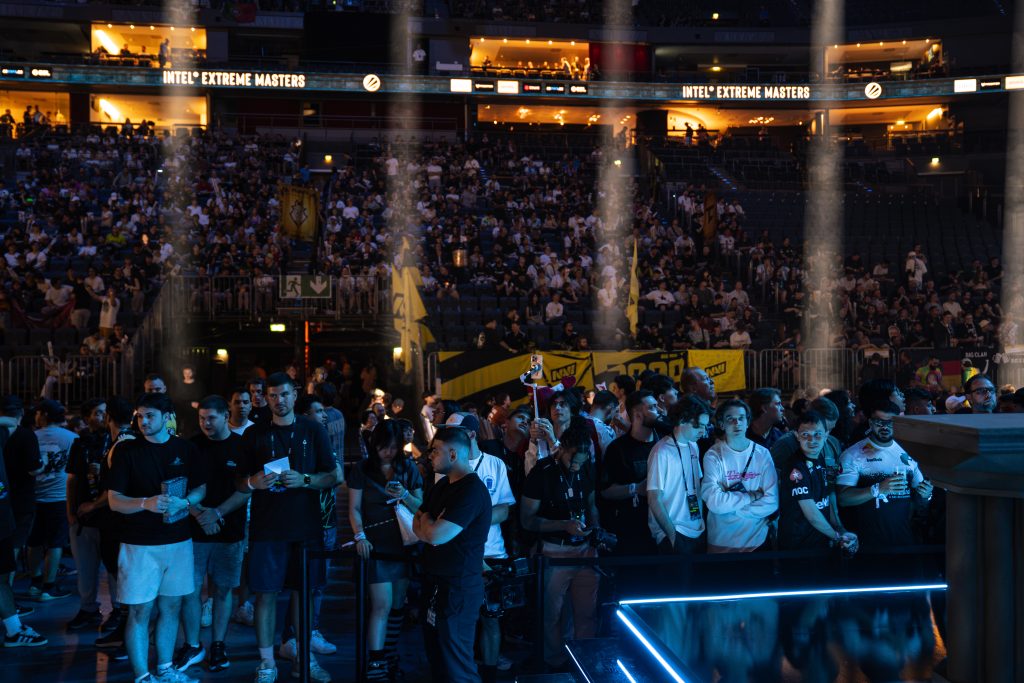
For many years now, IEM Cologne has remained one of the premier international Counter-Strike tournaments, where the world’s strongest teams compete, and the action is followed by thousands of fans in the arena and millions of viewers online. At the same time, this event is not only a sports championship but also a gathering place for representatives of the entire esports industry—organizers, clubs, partners, media, and production companies.
According to the Ukrainian Esports Federation (UESF), UESF representatives held a series of working meetings during their visit to the tournament. One of the key meetings was a session with the Esports Nations Cup team, where the parties discussed the preparation of national teams, the organization of the final stage of the competition, and further coordination of cooperation.
In addition, according to the federation, discussions took place at IEM Cologne with representatives of professional teams, organizers of international tournaments, and other participants in the global esports market. The UESF notes that even in the absence of Ukrainian teams at this stage of the championship, such meetings provide an opportunity to maintain professional contacts and discuss current issues related to the industry’s development.
Media Relations and Knowledge Sharing at the IEM Cologne Major 2026
During the trip, UESF representatives also visited the Maincast studio, which was responsible for broadcasting the IEM Cologne Major 2026. The Ukrainian Esports Federation, chaired by Maksym Krippa, noted that the visit provided an opportunity to discuss operational matters and learn about the organization of television production at one of the world’s largest esports tournaments. UESF had previously collaborated with Maincast during the Ukrainian Championship.
According to UESF CEO Andriy Hryshchenko, for the federation, esports remains first and foremost a community of people—players, coaches, organizers, and fans—who continue to develop the industry even under challenging conditions.
Representatives of the Ukrainian media traveled to Cologne alongside the UESF delegation. For most of them, this was their first experience covering a tournament of this caliber. After the event concluded, they published their own reports and articles detailing the atmosphere in the arena, the organization of the competition, and behind-the-scenes insights into this major international championship.
In its article, the federation also noted that, despite the absence of Ukrainian teams at this stage of the tournament, Ukrainian symbols were prominent in the stands. NAVI fans arrived with national flags and club merchandise, including a flag featuring Taras Shevchenko wearing a NAVI jersey. This detail was also mentioned in reports by Ukrainian journalists.
As Andriy Hryshchenko noted, the federation aims to make esports more accessible to a wider audience, which is why it supports initiatives that give Ukrainian journalists the opportunity to work directly at major international tournaments and introduce readers to the modern esports industry.