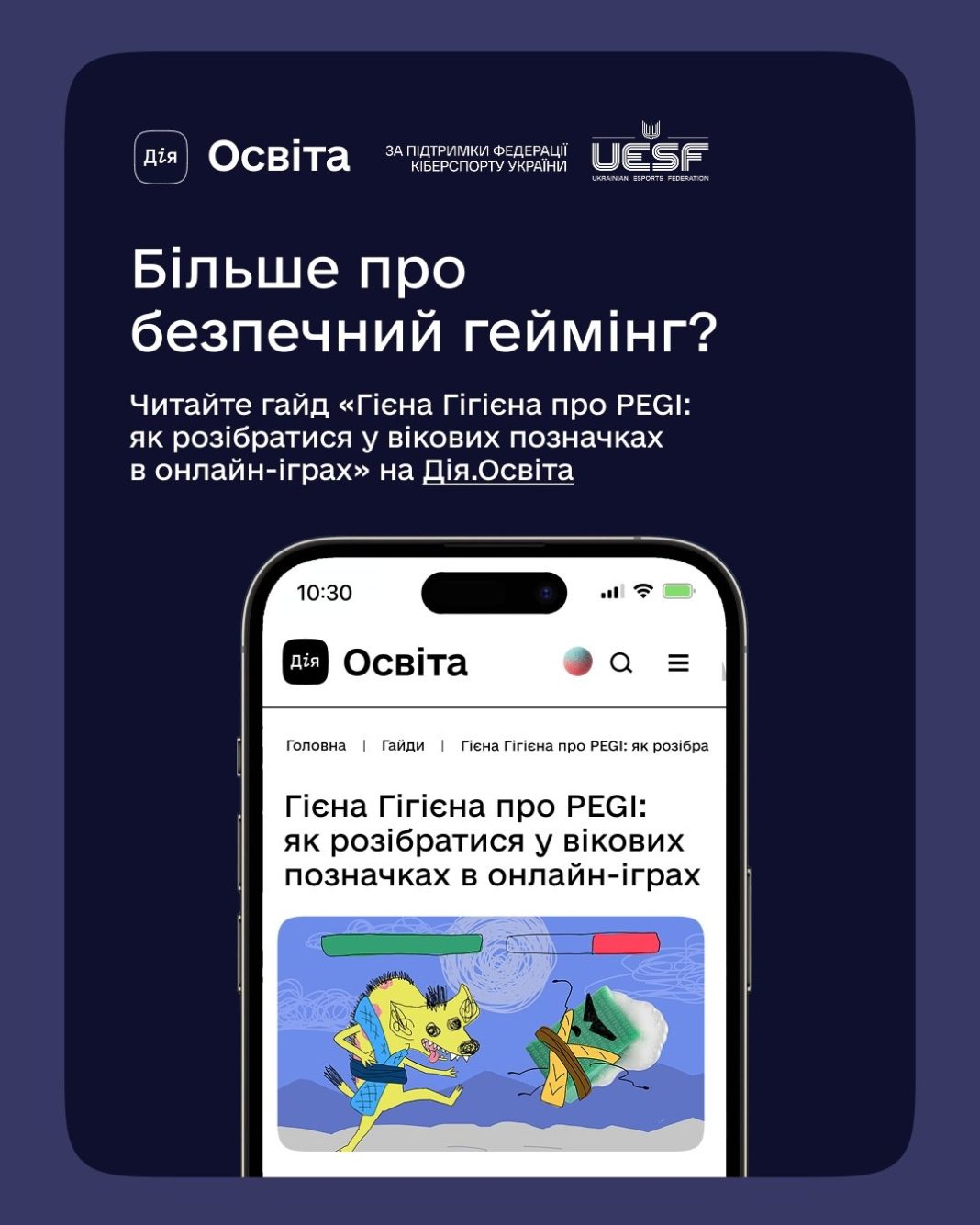
Age restrictions and potentially dangerous content are important points to consider when choosing video games for children. A guide from the Ministry of Digital Transformation of Ukraine and the Ukrainian Esports Federation (UESF) will help you understand them.
The guide is published on the Diia.Osvita platform. It examines in detail the PEGI age classification system, as well as the capabilities of a special PEGI App, with which you can check information about a specific game.
Video games have long ceased to be just a way to spend your free time. They can contribute to the development of logical thinking, creativity, communication and help children express themselves. However, choosing a game requires attention, especially when it comes to young users.
Safe Gaming Checklist: Basic Rules
Before downloading a game, check the PEGI rating and content warnings. You can find more information in the game description, reviews, trailers or gameplay. Also pay attention to in-game purchases, including random items and limited-time offers. It is recommended to set parental controls, age restrictions and spending limits for children’s accounts in advance.
PEGI (Pan-European Game Information) is a European age rating system for video games that helps determine which age group a particular game is suitable for and whether it contains potentially objectionable content. It was launched in 2003, and today, two independent bodies handle the ratings: NICAM handles PEGI 3 and 7 ratings, while the GRA (Gaming Rating Authority) rates games in the PEGI 12, 16, and 18 categories.
The system is supported by leading console manufacturers, including Sony, Microsoft, and Nintendo, and the European Commission has previously cited PEGI as an example of an effective approach to child protection.
It is important to maintain a balance between gaming and other activities when playing. Determine a comfortable length of gaming sessions and remember to take breaks. If the game involves purchases, it is better to set a budget in advance and not exceed it. Parents should also be interested in what their children are playing and talk to them about the games and purchases within them.
When communicating online, do not give out personal information to strangers – such as your address, phone number, school name, passwords or private photos. You should also be careful when dating online: children should not agree to meet in person without their parents’ knowledge and supervision. If harassment, threats, or other inappropriate content occurs in the game, the offender can be blocked and reported using the platform’s available tools.
The main principle is simple: check the game’s rating, control time and expenses, and follow the rules of safe online communication.
Safe gaming as part of esports development
You can learn more about the principles of safe and responsible gaming on the platform Diia.Osvita.
The Ukrainian Esports Federation (UESF), whose president is Maksym Krippa, continues to develop the Ukrainian esports ecosystem and is involved in popularizing knowledge about the industry.
With the growing interest of young people in video games and esports, the issue of safe gaming is becoming no less important than the game itself. Understanding age ratings, following the rules of online communication, and controlling time and expenses help form a responsible approach to gaming and create a comfortable environment for both children and parents.