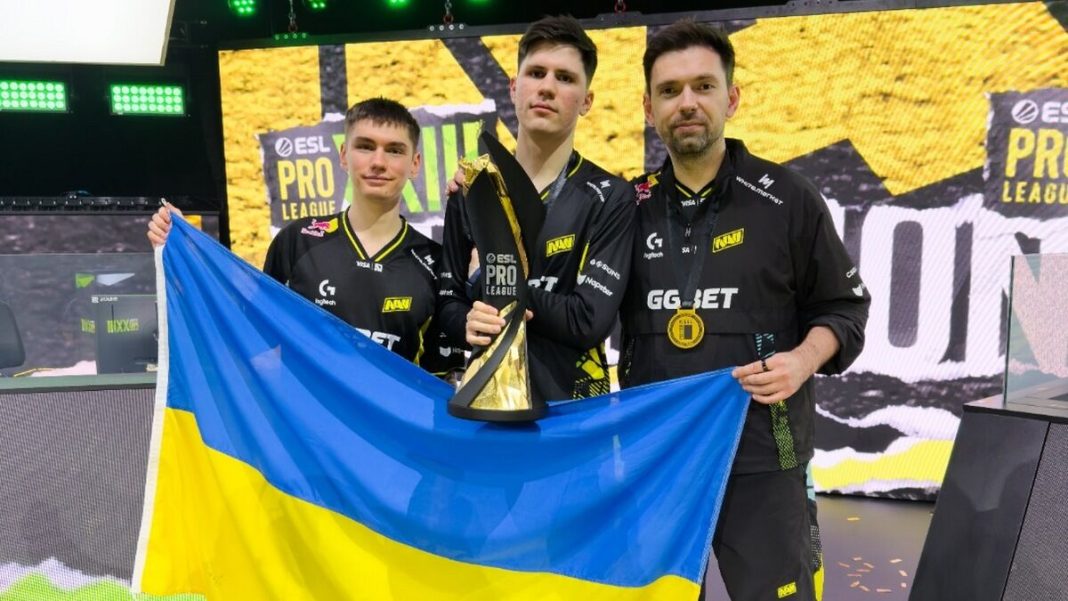
Esports in Ukraine has long since ceased to be a niche hobby. A particularly important milestone in its development was the official recognition of esports as a sport in 2020. Since then, the Ukrainian esports scene has continued to grow, and more and more young players are looking to build their future in it.
For those who want to pursue a professional career in esports, there are academies run by well-known Ukrainian organizations—NAVI, B8, Inner Circle, and others. These academies give young players the opportunity to gain experience, train in a team environment, and gradually work their way up to the professional level.
But what about those who, for one reason or another, can’t get into an academy? One option is to blaze your own trail to the professional scene. To do this, you need to play a lot, regularly participate in tournaments, and prove your skill level.
In Ukraine, it’s already possible to play in tournaments, compete against other teams, and even earn points in Valve’s global ranking. Let’s take a closer look at how this works.
What Should the Ukrainian Qualifications System Look Like
If a player doesn’t make it into the academy of a well-known organization, that shouldn’t mean the end of their journey in esports. On the contrary, in Ukraine, there should be an opportunity to forge this path independently—from the first amateur tournament to competitions against the country’s strongest teams. This requires a clear qualification system that not only determines the winners but also helps teams develop.
First and foremost, qualifying for such competitions should be straightforward. A team shouldn’t need a well-known tag or dozens of tournaments under its belt to get the chance to test itself against a stronger opponent. Open qualifiers can serve as the perfect launching pad for teams that don’t yet have a big name behind them.
At the same time, one attempt per year isn’t enough. A team can prepare well, but a bad match or a small mistake can end its run right at the start. When there are several opportunities to play throughout the season, a setback isn’t a death sentence. The team can learn from its mistakes, adjust its approach, and return to the next tournament stronger.
It’s also important that participating in the qualifiers shouldn’t be an end in itself. A good result should bring the team something more than just a spot in the standings. This could be prize money, ranking points, advancing to the next stage, or the chance to play against stronger opponents. In this case, every tournament becomes another step upward, rather than a standalone event that’s forgotten after the finals.
Another important point is prize money. Even major tournament organizers sometimes face issues regarding the size of the prize pool and payouts. For a player who wants to make a career in esports, participating in competitions requires a significant investment of time, effort, and personal funds, so being rewarded for performance is important at every level.
Teams from different countries regularly travel to Tier 2 and Tier 3 tournaments, where prize money is often awarded only to the winners or the top-performing teams. At the same time, in some competitions, participants also pay an entry fee, which contributes to the prize pool. That is why it is important for Ukrainian qualifiers that a good result provides players not only with experience but also with real financial rewards.
Where Ukrainian teams can find opportunities
In Ukraine, this model is already in practice. The Ukrainian Esports Federation (UESF) hosts a series of CS2 and Dota 2 tournaments where teams can start in open qualifiers and gradually advance to the main stage. Importantly, participation in these competitions does not require an entry fee, and the matches themselves are held online. This allows players to balance tournaments with school, work, or other commitments.
The series consists of several stages that take place throughout the year. At each stage, teams have multiple opportunities to advance—usually through three or four open qualifiers. Matches are played using a double-elimination system, and the format depends on the stage: BO1 matches are used at the start, while BO3 series may be played in subsequent rounds. Teams earn points for their performances and can advance through the tournament bracket.
However, the motivation isn’t limited to simply advancing through the qualifiers. This means that even for a team just starting out, a good result can yield a very tangible financial reward.
But what about a player who wants to participate but doesn’t yet have their own team? The Federation has provided an opportunity for such participants as well. In the later stages, specifically Stage 4, individual registration is available: after that, rosters are formed by the Federation itself, taking into account roles and skill level. Thus, the lack of a ready-made roster does not prevent a player from participating in the tournament.
Such competitions have another important advantage—their value isn’t limited to just prize money. The tournaments have official status and can earn teams ranking points and VRS (Valve Regional Standings) status. For Ukrainian teams, this is an additional opportunity to gain visibility on the international stage and gradually climb the rankings.
In addition to its own competitions, the Federation also helps organize other Ukrainian esports events. One example is FANCON, where participants in the LAN tournament in Kyiv had the chance to compete not only for a cash prize but also for a two-day boot camp with NAVI—one of the most famous Ukrainian esports organizations.
It is precisely these kinds of opportunities that demonstrate that the value of Ukrainian tournaments cannot always be measured solely by the amount of prize money. For a young team, matches against stronger opponents, new connections, ranking points, or the chance to attend a boot camp can be a much more significant step in their development than a single payout for a victory.
Who is involved in the development of Ukrainian esports
The UESF took on this new form following the arrival of a new leadership team—people with many years of practical experience in various areas of esports and the necessary resources to develop the industry. The new board includes representatives from various sectors of the Ukrainian esports scene, so each member can contribute their own expertise.
Among them is NAVI CEO Yevgen Zolotaryov, who has led the organization since 2017 and has many years of experience managing one of Ukraine’s leading esports clubs.
Vitaliy Volochay, founder and CEO of the Maincast broadcasting studio—one of Ukraine’s most renowned commentators in sports and esports—has also joined the board. Other new members include commentator and streamer Mykhailo Zverev, as well as Andriy Horodenskyi—a NAVI coach and former professional player. His experience spans both competing on the professional stage and working with the team as a coach.
Another key role is filled by NAVI COO Oleksiy Kucherov—a professional analyst and former Counter-Strike player who has worked with both NAVI and the tournament operator StarLadder.
Andriy Hryshchenko, who also heads the Ukrainian National Olympic Committee’s Esports Commission, has been appointed Executive Director of the UESF. He has over 15 years of experience in developing ecosystems and professional communities and was one of the initiators of the Federation’s reform, the development of national teams, and social projects in the field of esports.
Maksym Krippa—owner of NAVI and an investor with a portfolio of assets across various sectors—has taken the helm of the Federation.
New partnerships have also become equally important. The UESF has expanded its collaboration with the National University of Physical Education and Sports of Ukraine, the SENET technology platform, and Logitech G, and is also working with the international organizations IESF and Esports Nations Cup.
The educational initiative deserves special mention. Together with the National University of Physical Education and Sports of Ukraine, the Federation is developing a master’s program in “Esports,” so those who wish to build a future in this field now have the opportunity not only to play but also to pursue specialized education and advance professionally within the industry.